
Giant Gene Discovered
In 2006, researchers in Finland discovered that a mutation in the AIP gene on chromosome 11 causes gigantism in some families. Afterward, Professor Márta Korbonits in London noticed that several of her patients with familial gigantism were from a small area in Northern Ireland. She found that they shared a specific AIP gene variant, ARG304STOP codon. The area west of Lough Neagh in Co. Tyrone and Co. Derry is now considered to be a genetic hotspot for the disease. She also connected the mutation to Charles Byrne, a famous Irish giant from the 1700s who lived in that area.
The Traveling Gene
Dungannon resident, Brendan Holland has lived most of his life in the genetic hotspot identified in Prof. Korbonits’ research. He was treated in 1972 for gigantism at St. Bartholomew’s Hospital in London, and in 2010, he met Prof. Korbonits at the hospital during the filming of the documentary Charles Byrne, the Irish Giant. He is committed to furthering Dr. Korbonits’ research and identifying others with gigantism.
Diagnosed in 1976 in Washington, D.C. at age 20 with acromegalic gigantism, Colleen Snyder searched for 45 years to find another person with the same diagnosis. During the COVID lockdown in 2020, through serendipity, a Google search, and a at-home DNA test kit, she found out that the rare AIP ARG304STOP genetic mutation caused her gigantism. The mutation was brought over to the U.S. when her great-great grandfather emigrated from Coalisland, Co. Tyrone in the genetic hotspot in Northern Ireland. She is the first person in the United States identified with the mutation.

Since the discovery of the AIP gene and the variant linked to Northern Ireland, we know that some immigrant families likely carried this gene mutation with them. Our goal is to find these families and share information that could help prevent the serious effects of gigantism.
– Brendan Holland, Dungannon, Co. Tyrone, Northern Ireland
– Colleen Snyder, Linden, Virginia, USA
Community Testing
In 2013, Professor Korbonits and her team from London, along with doctors from Mexico, Romania, and Venezuela, set up mobile clinics in Tesco parking lots in Cookstown and Dungannon. Over two weekends, they collected DNA samples from more than 900 local residents in County Tyrone. The screening found families with the same AIP mutation, and many had signs of the disease. Based on the data, researchers believe the original carrier of this mutation lived more than 100 generations ago, which might help explain the many Irish legends and stories about giants found in the area.

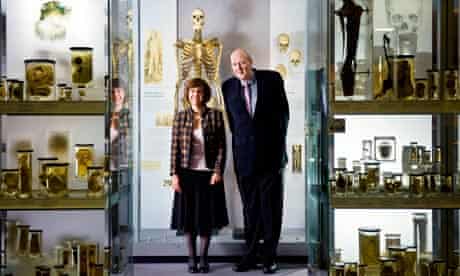
Prof. Márta Korbonits, MD, PhD, Professor of Endocrinology and Metabolism, Queen Mary University of London and Barts Health NHS Trust, London, United Kingdom
Ronan McCloskey, producer and director, Charles Byrne: The Irish Giant

In 2010, Ronan McCloskey began filming a BBC documentary about Charles Byrne, the famous Irish giant who died in 1783. McCloskey, originally from Omagh in Northern Ireland, met modern-day giant Brendan Holland while researching the film and invited him to London to see Byrne’s skeleton. When he reached out to the Hunterian Museum, where the skeleton had been on display since Byrne’s death, he learned that Professor Márta Korbonits had already taken a DNA sample to compare with living Irish giants. McCloskey introduced Brendan to Prof. Korbonits, who went on to include him in her groundbreaking research. That work, connecting the AIP mutation to pituitary tumors in both past and present, was published in the New England Journal of Medicine in 2011 to wide acclaim.
St. Bartholomew’s Hospital, London, United Kingdom

Celebrating its 900th anniversary in 2023, St. Bartholomew’s Hospital or Barts has played a crucial role in the diagnosis of gigantism and the research detailing its cause. In May 2022, Colleen traveled to Barts with her sister Cherie Moye, who is a carrier of the AIP gene, to meet Prof. Korbonits, her mentor renowned endocrinologist Prof. Mike Besser, and Dr. Ben Loughrey, a specialist in the genetics of pituitary tumors. Brendan and his son Stephen made the journey as well. It was a homecoming for Brendan who was treated there, and an opportunity to learn more about the disease and related research. Studies continue on the effect of the AIP gene mutation on carriers. It is unclear why the disease only occurs before the age of 25 and why only 25% of those who carry the defective gene develop the disease in childhood.
FIPA WEBSITE
Familal isolated pituitary adenoma (FIPA) is a pituitary tumor that is caused by a genetic mutation that runs in a family. The AIP ARG304STOP gene mutation that is found in Northern Ireland is one type of FIPA. For more information about FIPA in general and more detailed information about the AIP mutation found in Northern Ireland, go to the Queen Mary University of London website https://www.qmul.ac.uk/fipa-patients/
CONTACT US
We are committed to reaching out and finding families affected by the AIP genetic mutation. We want to hear your story. You can contact Colleen Snyder at colleen@colleensnyder.net or through her website www.colleensnyder.net.